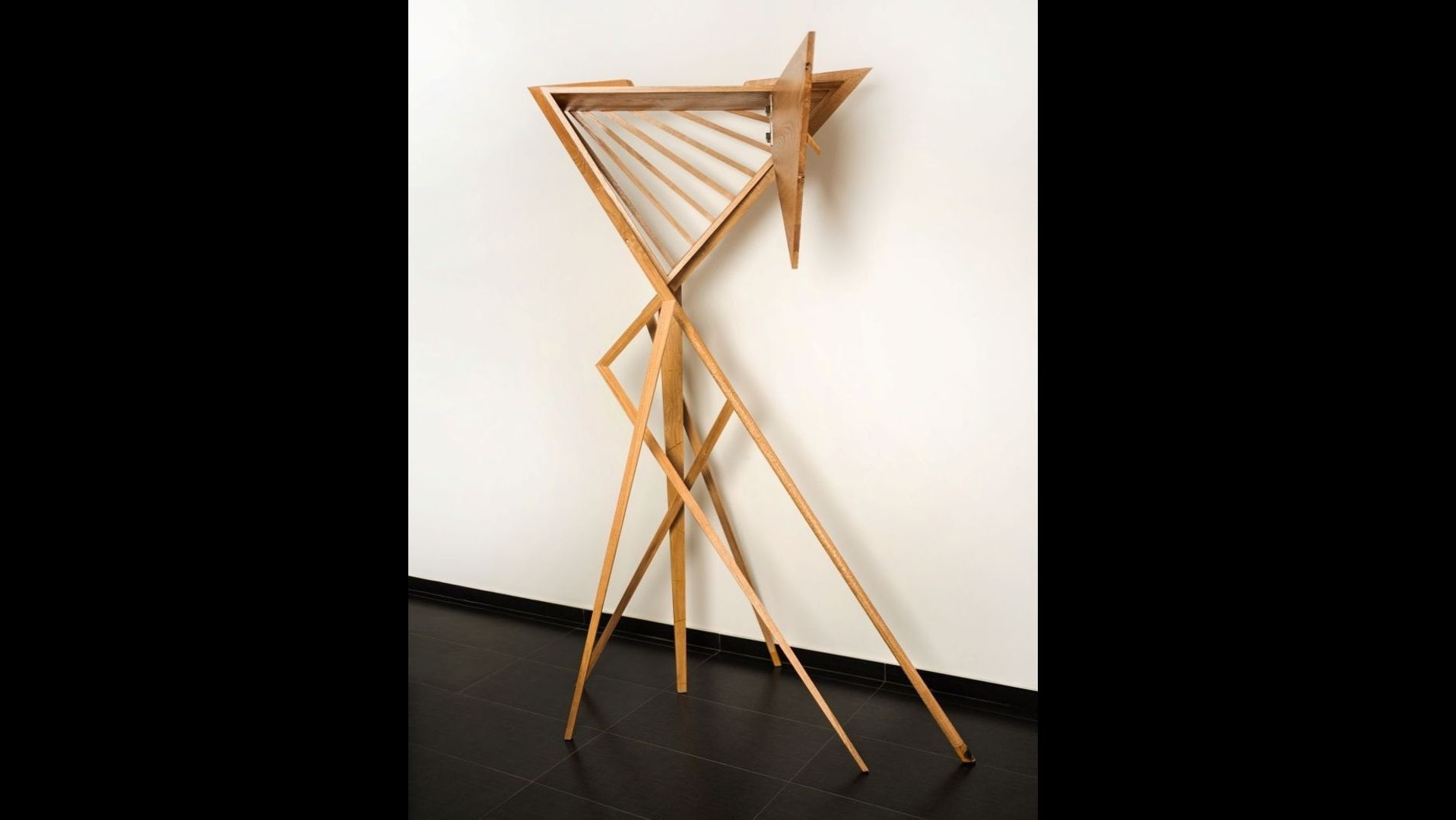
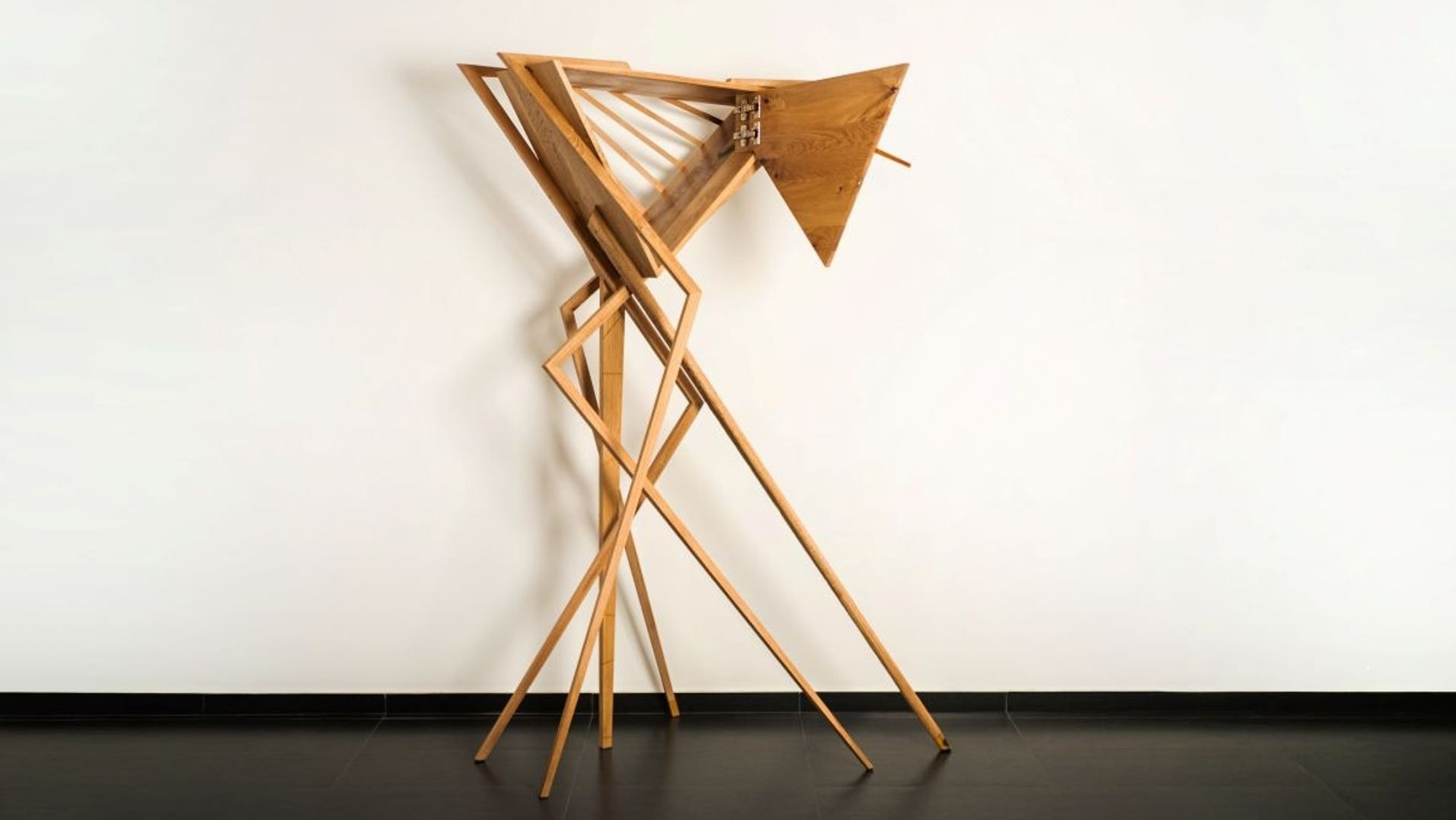
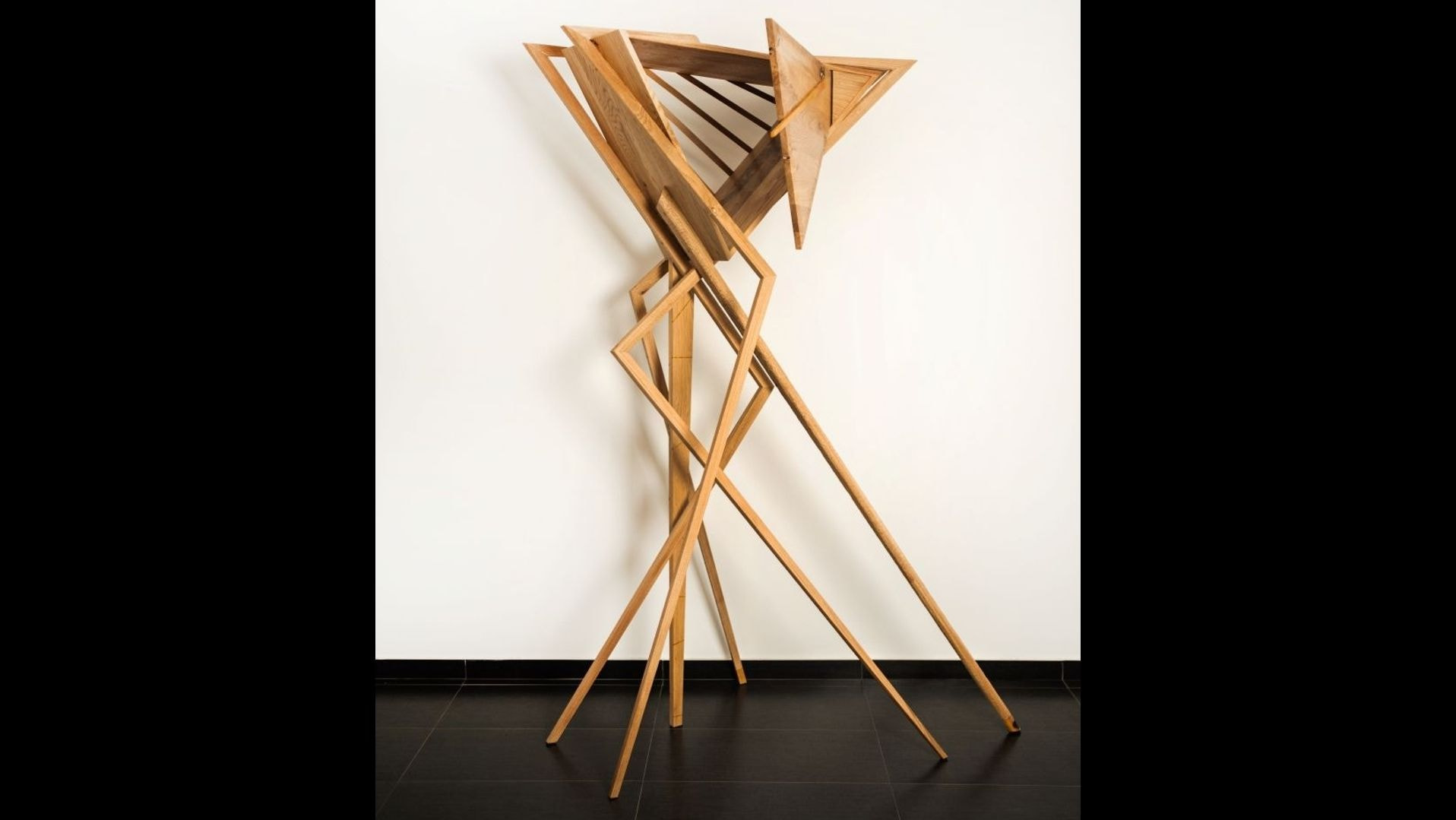
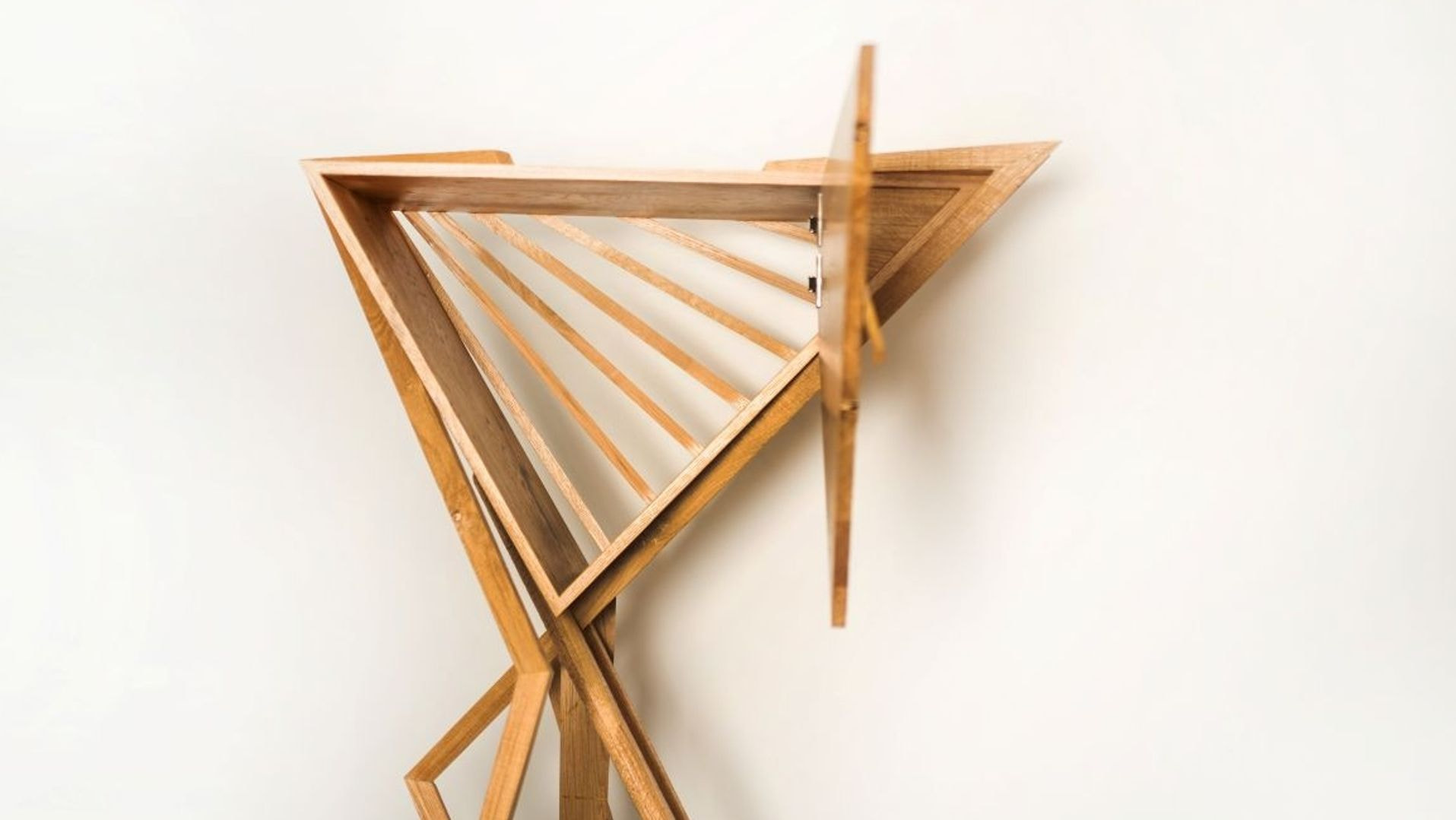
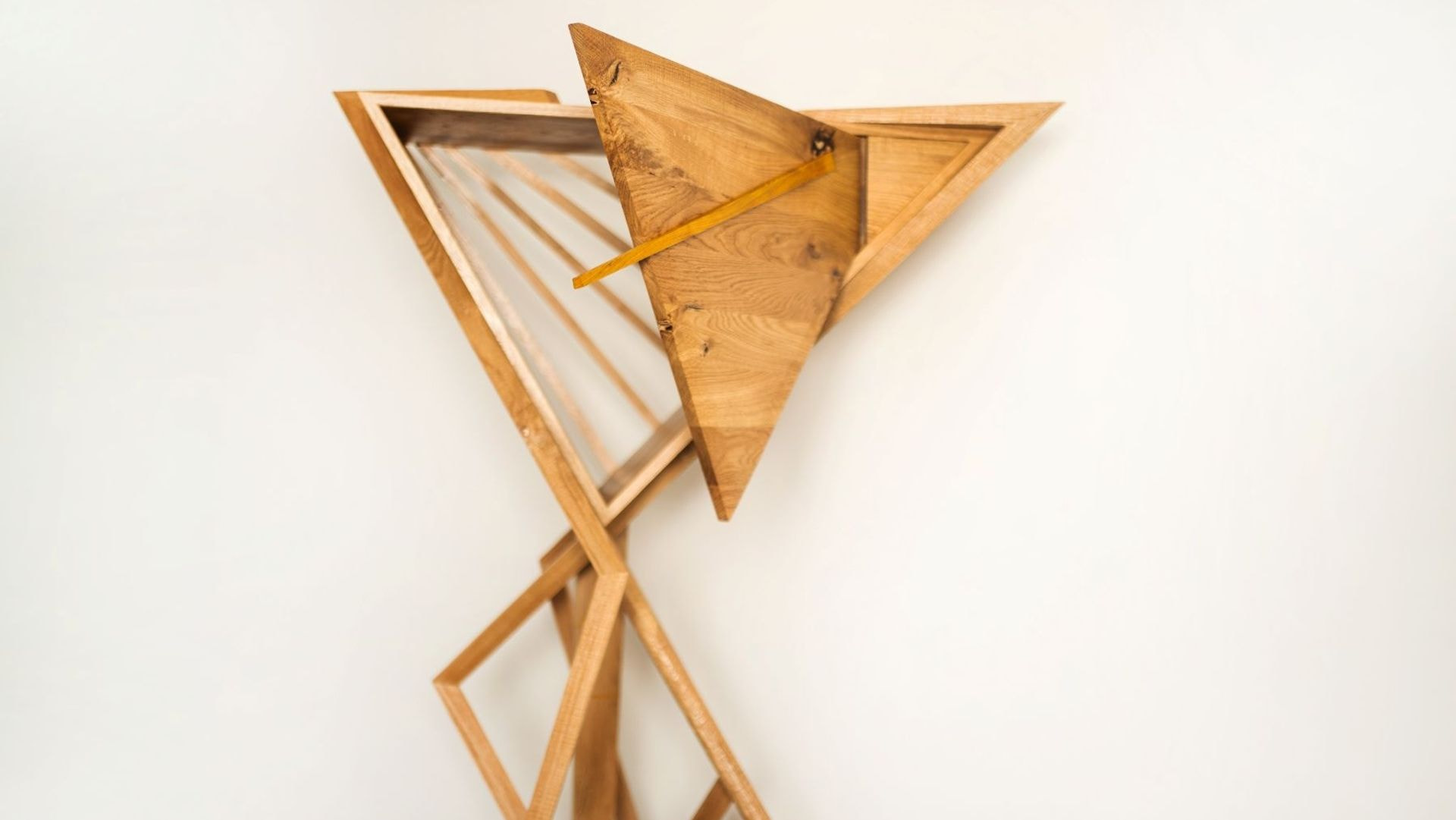
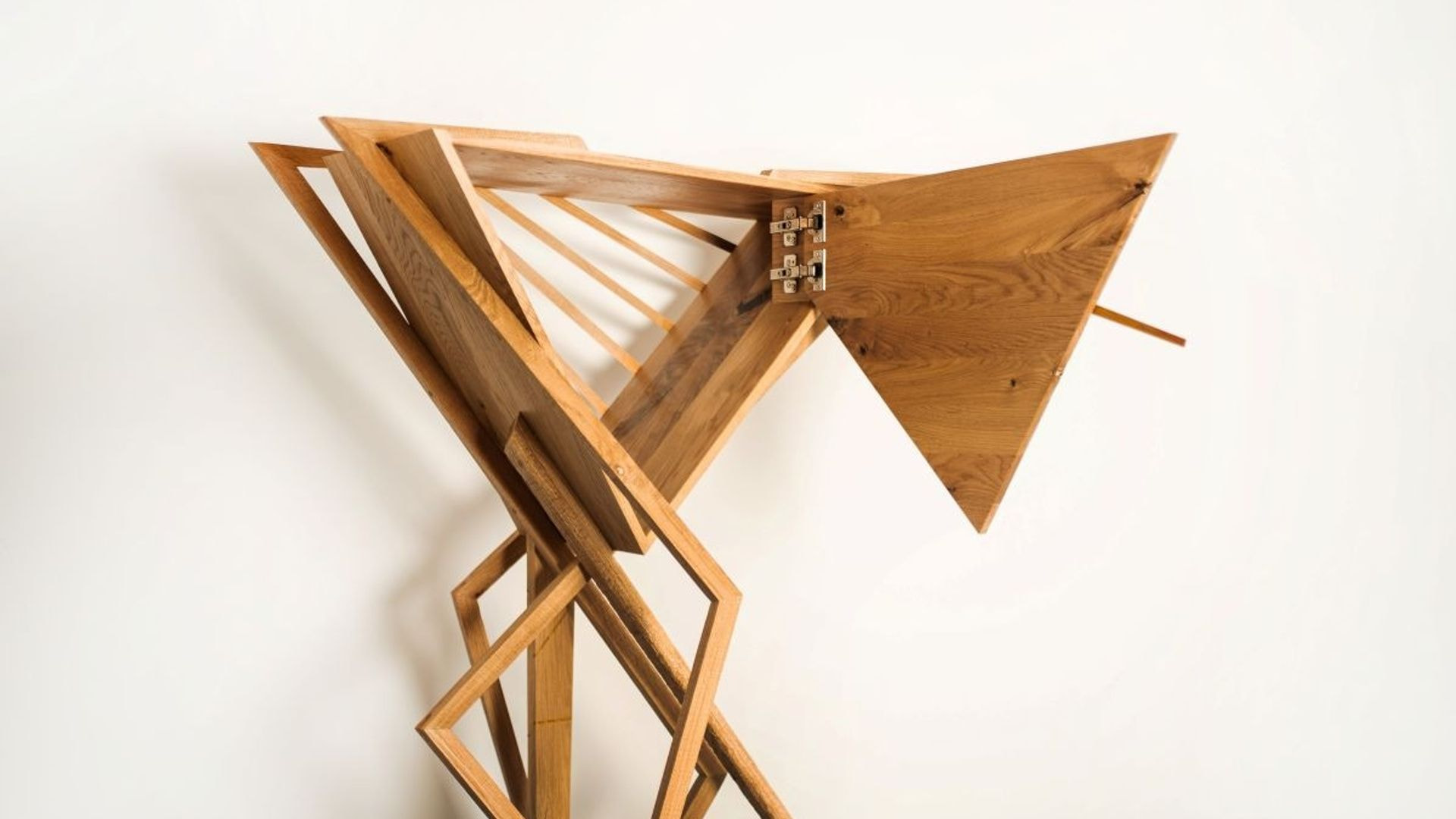
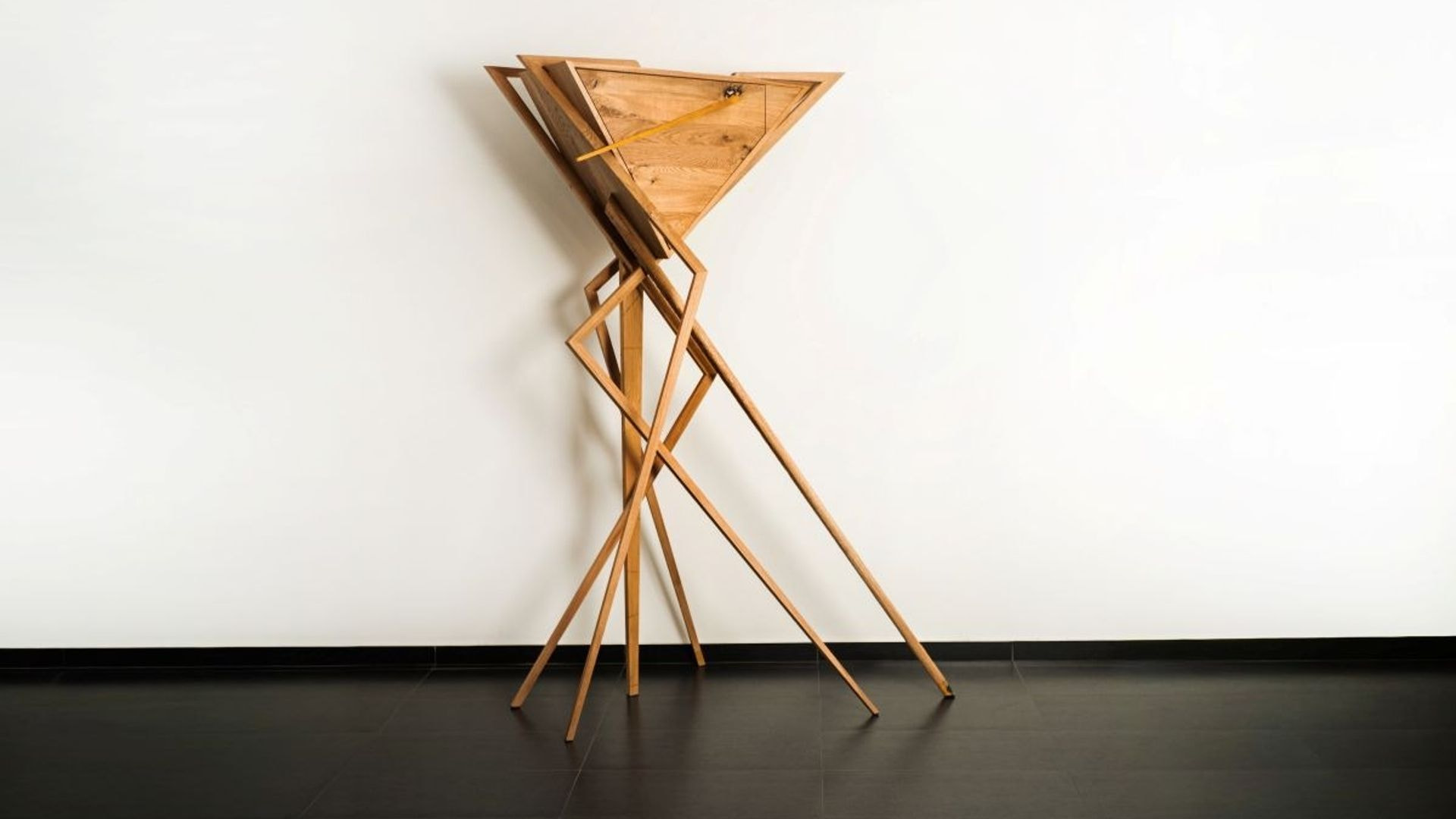
Schanty is not a cabinet in the classical sense of the word. It is a figure. A presence. Rising from the floor on long, articulated legs, it resembles a creature caught in a moment of balance, suspended between stability and movement. Its triangular silhouette opens and closes, like the tension between inner space and outward gaze.
Solid oak carries the weight of time, while sumac introduces a subtle chromatic shift—a trace of imperfection that emphasizes the handmade gesture and material honesty. The wood is not polished into silence; it speaks through its grain, knots, and edges. Every cut is a decision, every line bears the imprint of the body that shaped it.
Schanty stands as quiet architecture. It is not symmetrical, nor is it subordinate to function; instead, it transcends it. Usefulness is present but withdrawn—storage becomes an interior, a concealed cavity, almost a hiding place.
Within a space, it acts as a conversational partner. It does not fill the room; it tenses it. It is a boundary between furniture and sculpture, between object and being, between stability and risk.
Schanty is a singular moment captured in wood.



.jpg)
.jpg)